Problem
Scholarship selection at many institutions is done manually using spreadsheets or even paper-based scoring. This leads to inconsistent weighting across reviewers, lack of transparency in how final recipients are chosen, high time cost for the committee, and difficulty auditing past decisions. Applicants and stakeholders have no visibility into why someone was selected or rejected.
Process
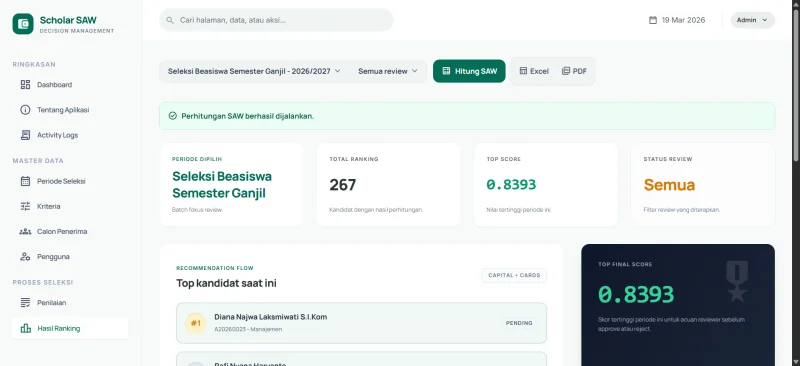
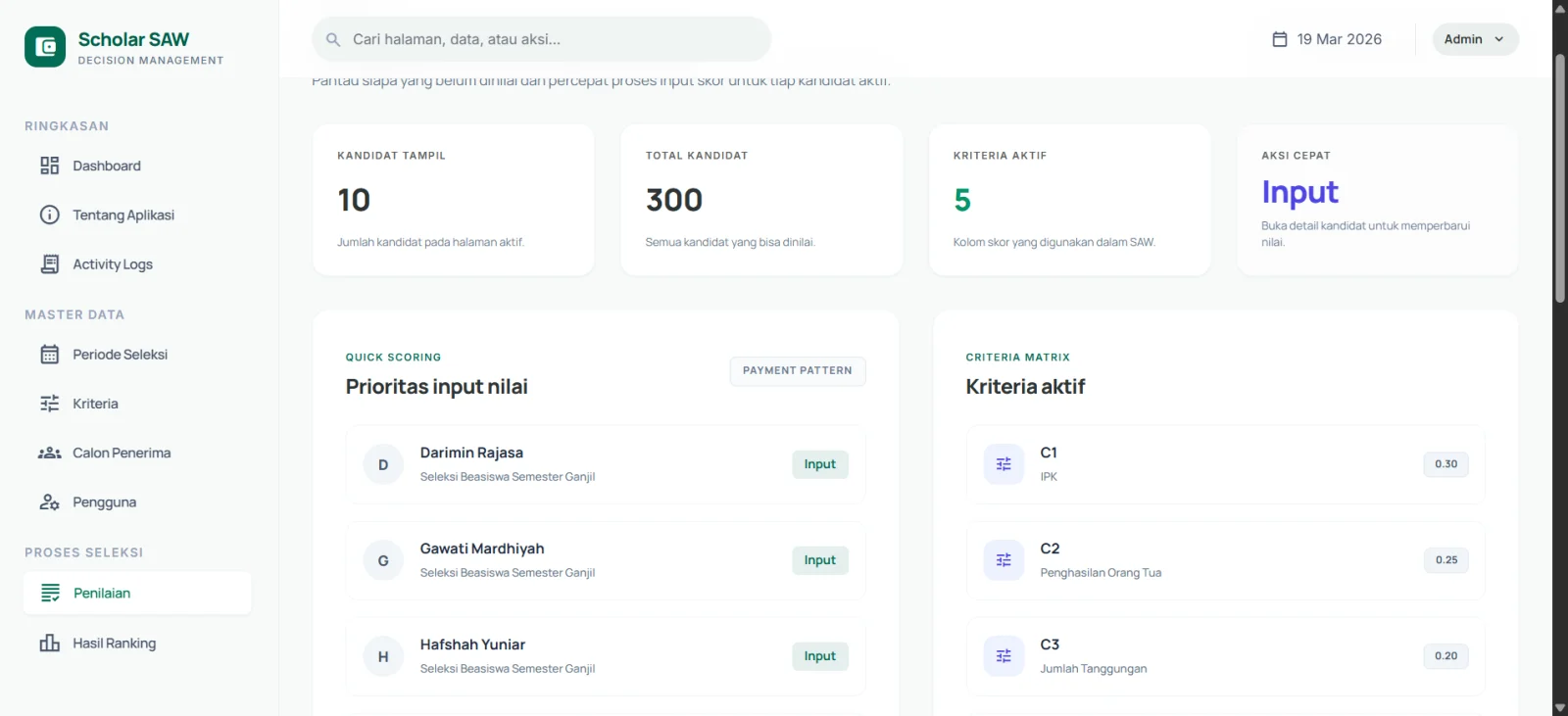
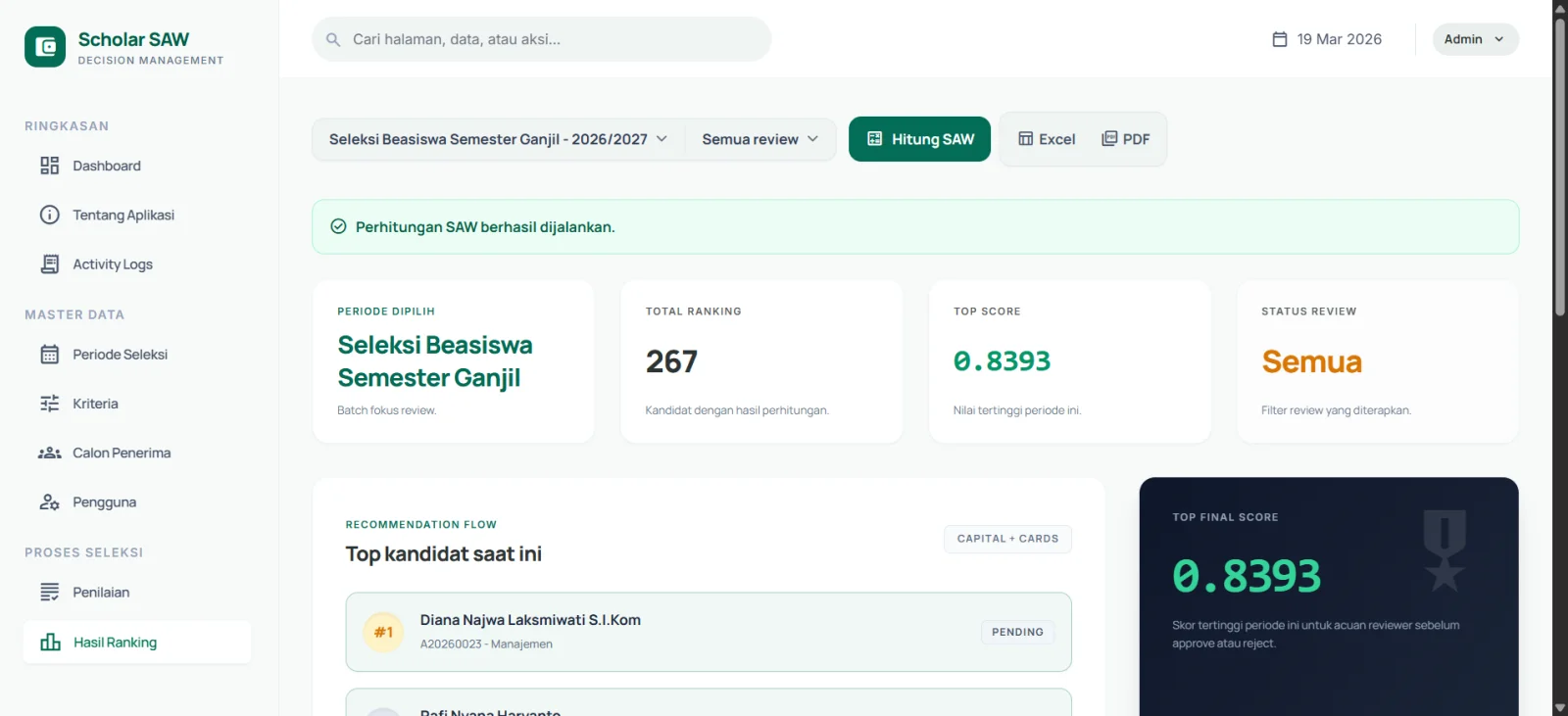
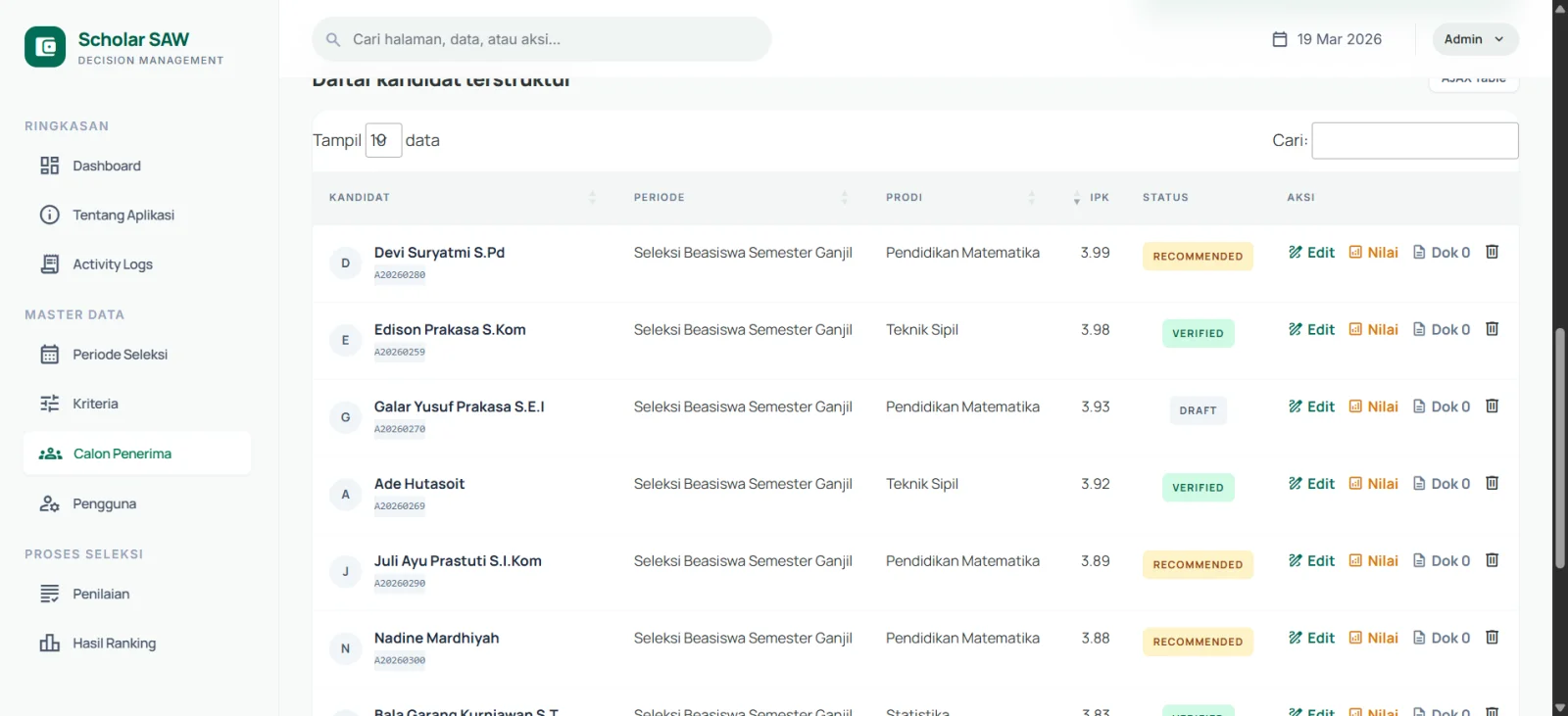
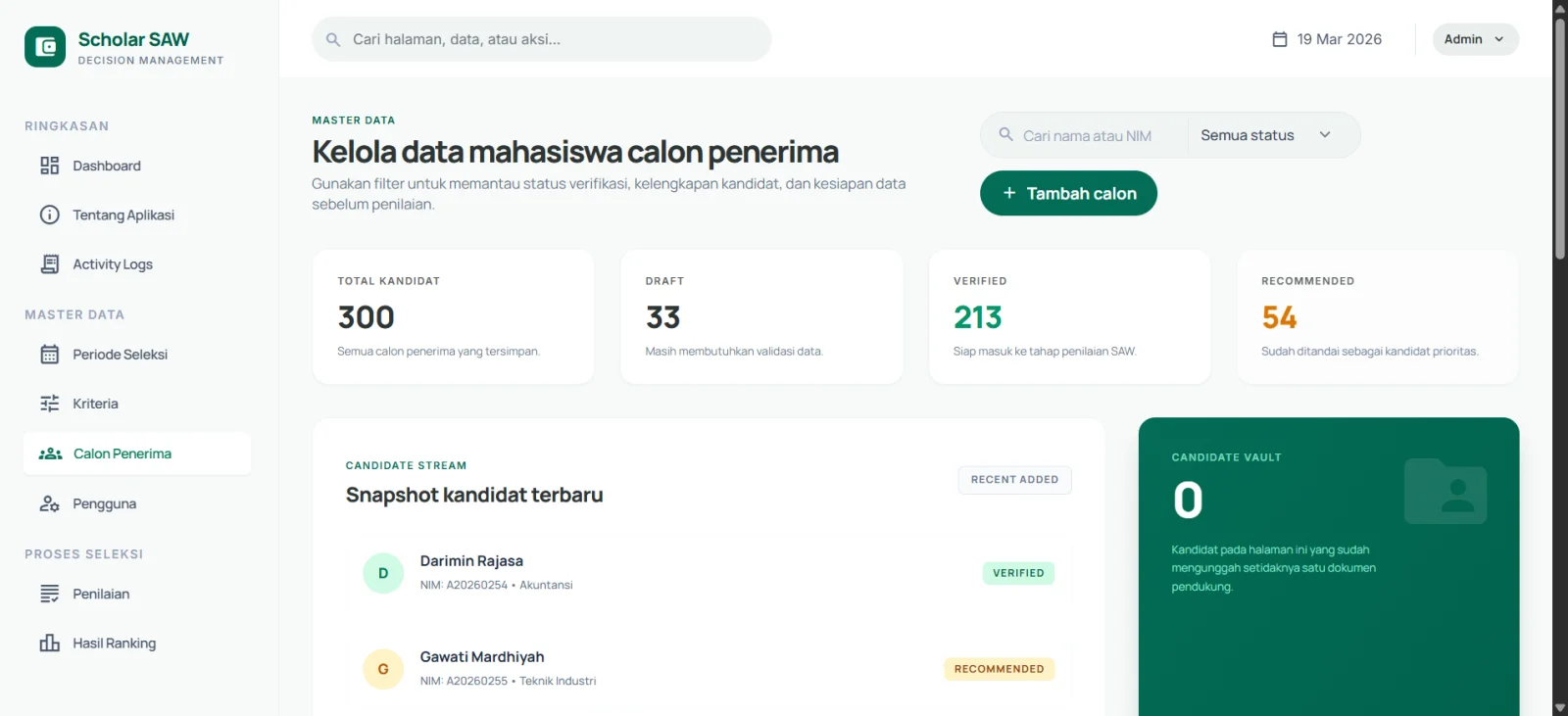
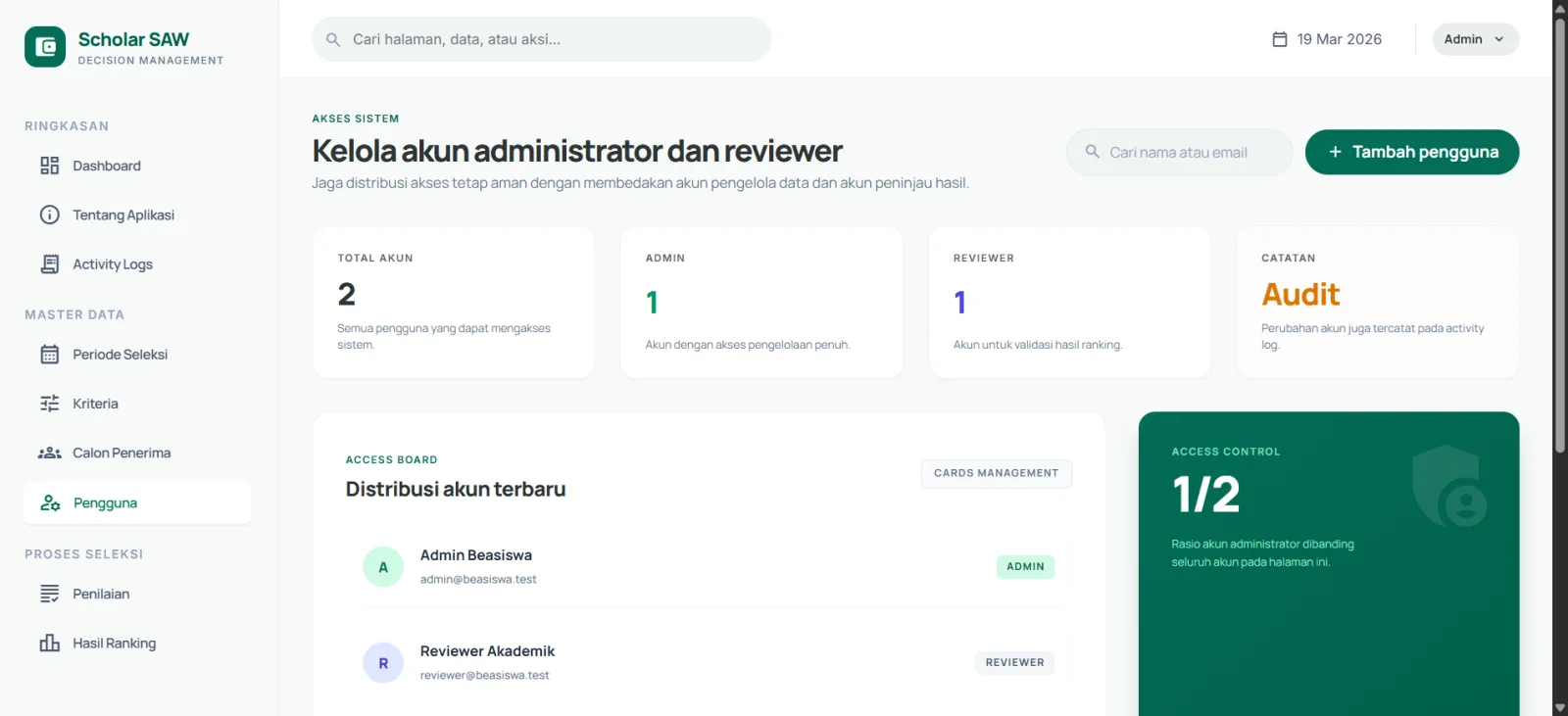
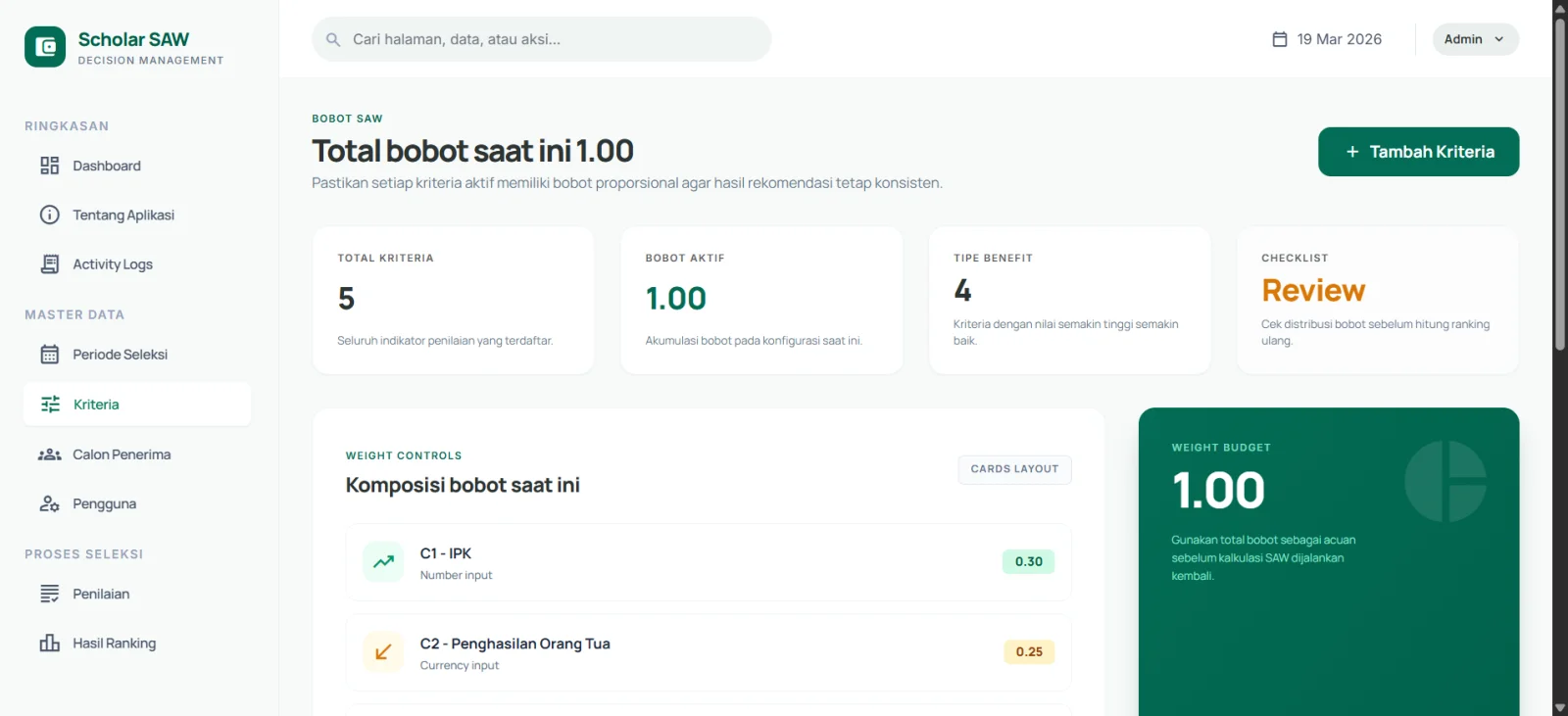
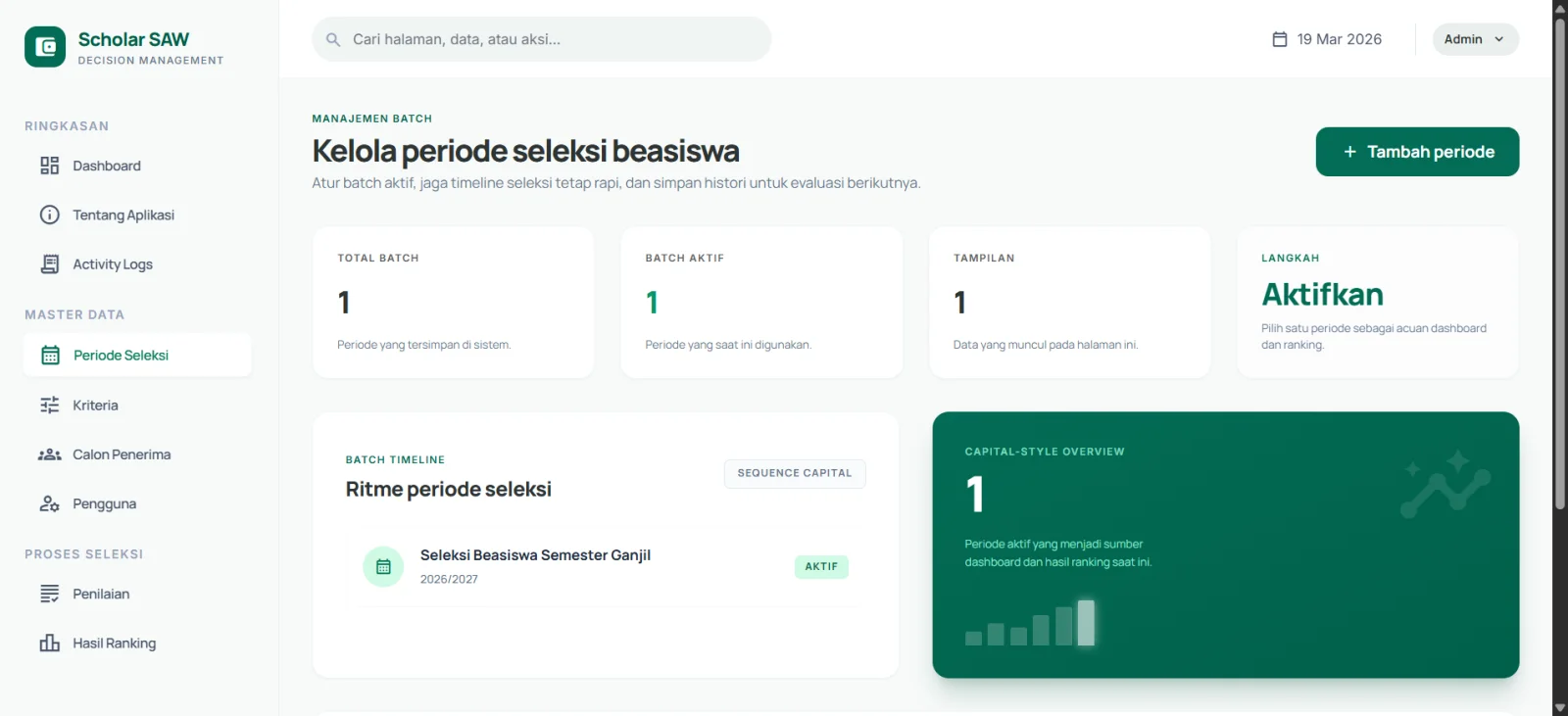
The process begins with the admin defining the selection period and configuring the evaluation criteria along with their respective weights and types. Next, applicant data and supporting documents are entered into the system. The admin then inputs the scores for each criterion for every candidate. The system automatically performs the calculation and generates a ranked list. The results are reviewed by reviewers, who can add notes and approve or flag entries as needed. Finally, the finalized results are exported as a PDF or Excel file for distribution.
Result
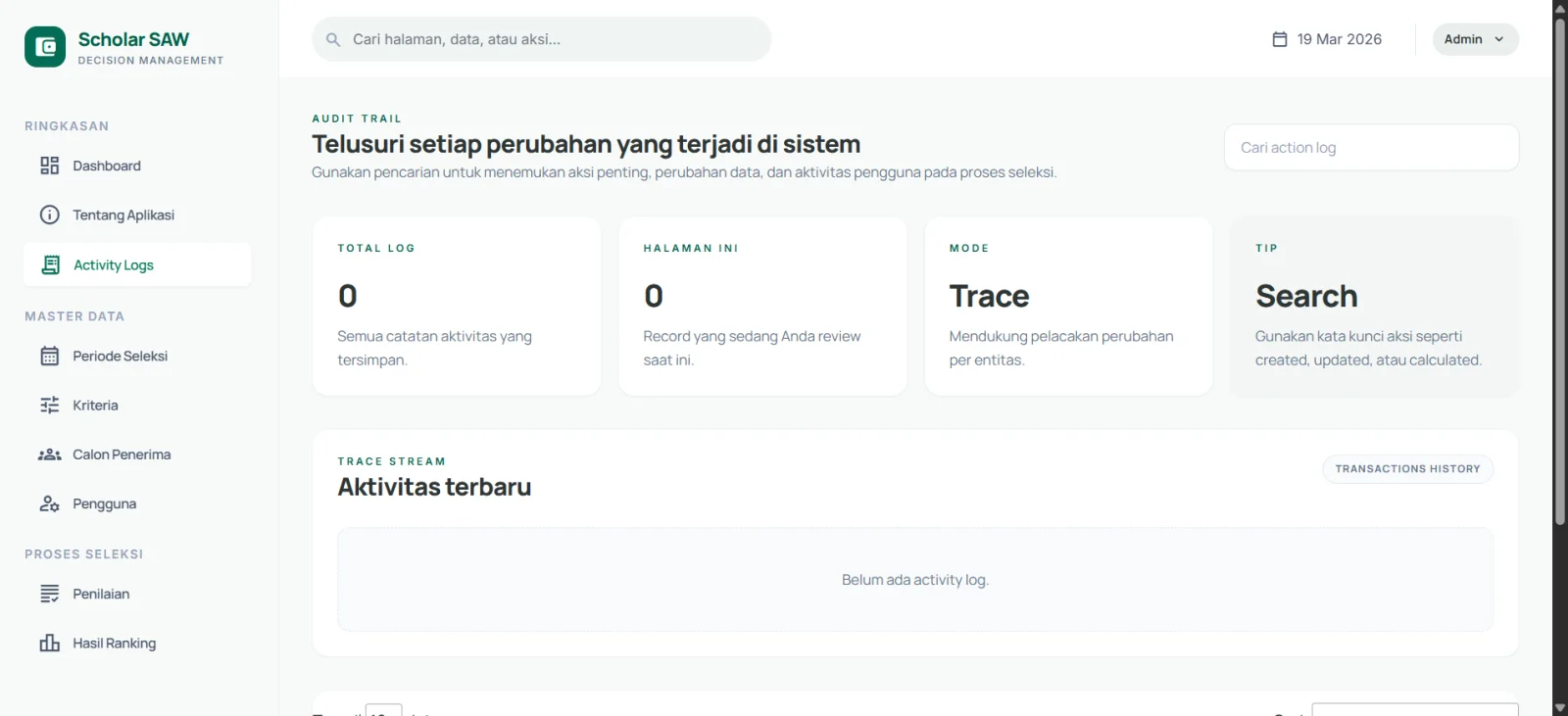
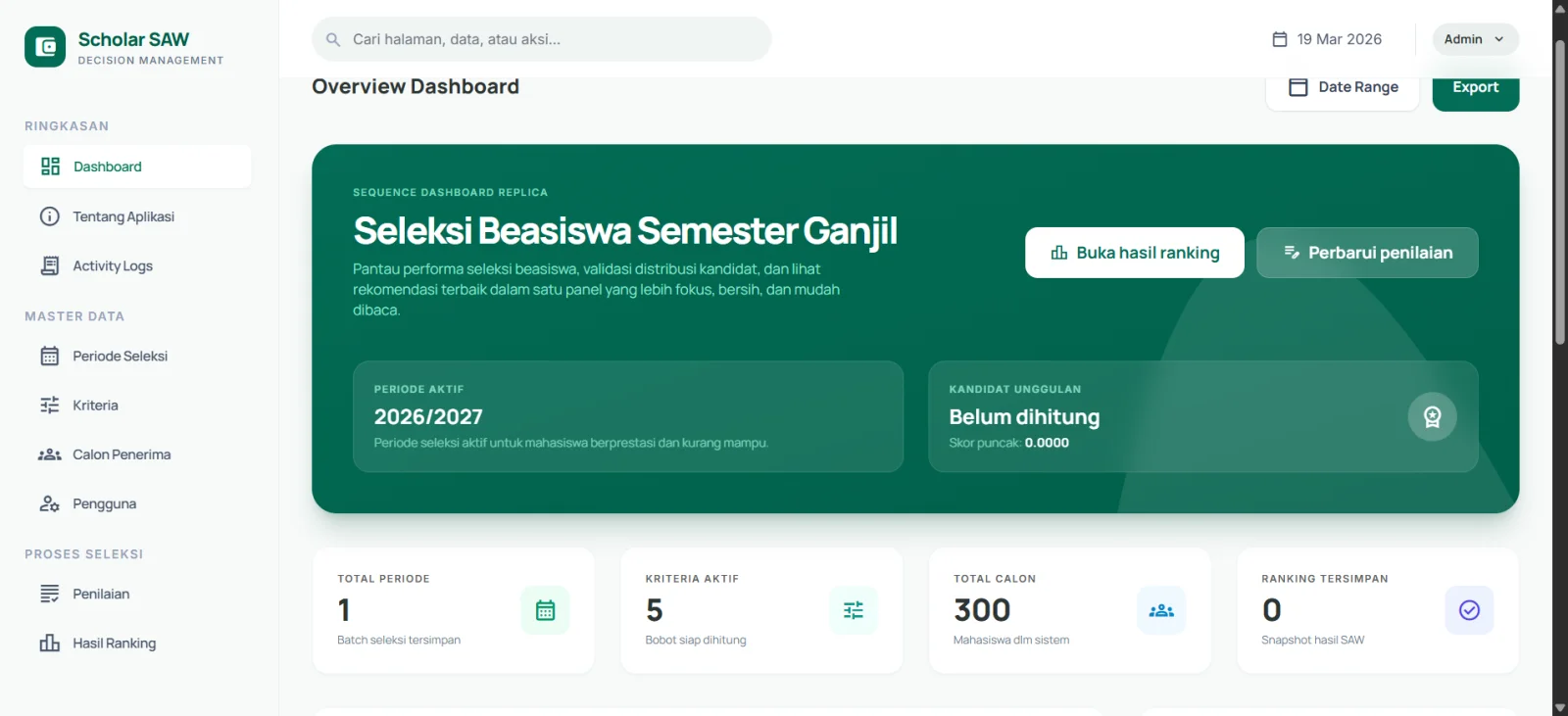
A fully ranked, transparent, and auditable shortlist of scholarship recipients — generated in seconds instead of days. Every score, weight, and calculation step is recorded and viewable. The review layer ensures human judgment is still part of the process, while the system removes manual bias from the math. Historical data from all past periods is preserved and never permanently lost due to soft-delete safeguards.